7th March, 2026
Search behaviour is changing again. For years, businesses have focused on optimising their websites for search engines and human visitors. Now there is a new audience emerging: AI agents.
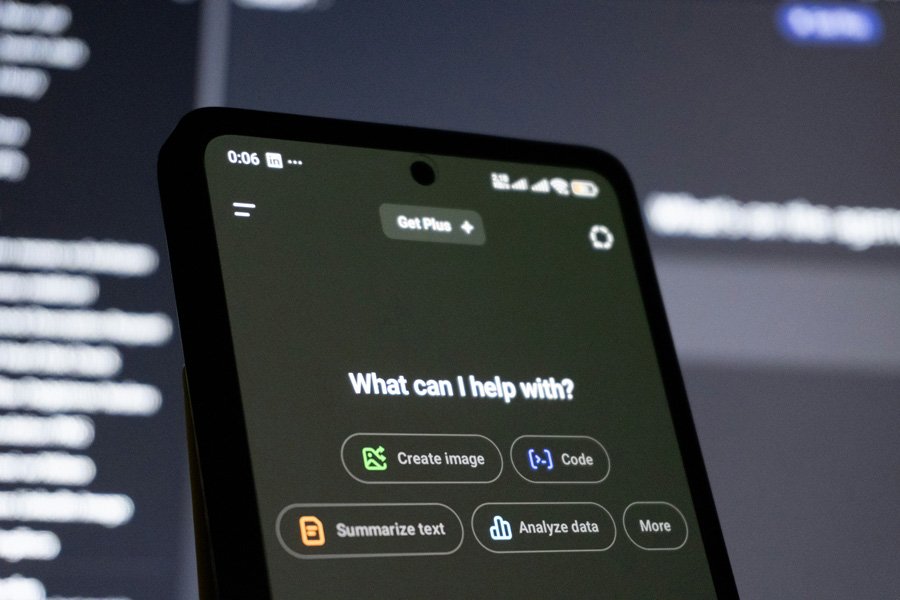
Tools powered by artificial intelligence are increasingly able to search the web, gather information and complete tasks on behalf of users. These systems are often described as “agentic AI”. As this technology becomes more widely adopted, businesses may need to think not just about how humans find and read their content, but also how AI agents interpret and use it.
In this article we’ll explain what agentic AI is, why it matters, and what practical steps small and medium-sized businesses can take to prepare.
What is agentic AI?
Agentic AI refers to artificial intelligence systems that can act independently to achieve a goal. Rather than simply responding to a prompt or question, an AI agent can plan steps, gather information, and carry out tasks across different systems.
For example, an AI agent might:
- Research suppliers for a project
- Compare services or pricing across websites
- Summarise information from multiple sources
- Book appointments or complete online forms
- Recommend products or service providers
Instead of a person manually searching, clicking through websites and reading multiple pages, the AI agent does much of that work for them.
This means businesses are no longer just competing for search engine rankings or human attention. Increasingly, they may also need to ensure their information is clear, structured and accessible to AI systems acting on behalf of users.
Why this matters for businesses
For many small and medium-sized businesses, traditional SEO has focused on helping people find your website through search engines like Google. That remains important, but the journey is beginning to evolve.
AI-powered assistants and agents are starting to act as intermediaries between users and websites. A potential customer may ask an AI system to recommend a web design agency, research a service, or compare providers.
The AI agent then gathers information from across the web and returns a short list of recommendations or a summary. If your website content is clear, trustworthy and easy for machines to interpret, it increases the chances of your business being included in those results.
This doesn’t replace traditional SEO, but it does add another layer to consider.
Optimising for agentic AI
The good news is that many of the fundamentals are the same principles that already support good SEO and user experience. The difference is that clarity and structure become even more important. Here are a few practical areas to focus on:
1. Clear, well-structured content
AI systems tend to perform better when information is logically organised and easy to interpret. Use clear headings, concise paragraphs and straightforward language. Avoid burying important details within long blocks of marketing copy. If your services, pricing, processes and expertise are clearly explained, both people and AI systems can understand them more easily.
2. Create authoritative pages
AI agents often prioritise sources that appear credible and well-established. This means having strong, informative pages about your services, expertise and industry knowledge. Blogs, guides and resource pages can help demonstrate experience and provide useful context that AI systems may reference when summarising information.
3. Provide direct answers
AI systems frequently look for content that directly answers questions. This is why FAQ sections, explanatory blog posts and clear service descriptions can be valuable. For example, a page explaining “What does a web design agency actually do?” or “How much does SEO cost in the UK?” is far more useful to both readers and AI agents than vague marketing statements.
4. Keep information consistent
Agentic AI often gathers information from multiple sources. If your business details, services and messaging are inconsistent across your website, directories and social platforms, it can make it harder for systems to interpret your offering. Keeping your information accurate and consistent helps build trust and clarity.
5. Demonstrate real experience
AI systems increasingly evaluate signals of credibility such as experience, expertise and reputation. Case studies, client examples, testimonials and practical insights all help demonstrate that your business has genuine experience in its field. These are also the kinds of signals that help both search engines and AI systems recognise reliable sources.
6. Focus on usefulness, not just keywords
Keyword targeting still has its place, but content written purely to rank rarely performs well in the long run. AI systems tend to prioritise information that genuinely helps answer a question or solve a problem. If your content is written to be genuinely useful to readers, it will naturally become easier for AI systems to interpret and reference.
7. The bigger picture
Agentic AI is still evolving, and the way these systems interact with websites will continue to develop over the coming years. However, the core principle is fairly simple: the clearer and more useful your content is, the easier it becomes for both people and machines to understand. For businesses, this doesn’t mean abandoning existing marketing strategies. Instead, it reinforces the importance of well-structured websites, helpful content and consistent information. In many ways, preparing for agentic AI is simply an extension of good digital practice.
Conclusion
AI agents are likely to play an increasing role in how people discover information, compare providers and make decisions online. While the technology is still developing, businesses that focus on clarity, credibility and genuinely useful content will already be well positioned.
Optimising for agentic AI isn’t about chasing the latest trend. It’s about making your website easier to understand, more helpful to users, and more accessible to the systems that are beginning to act on their behalf.
If you’re reviewing your website, SEO or content strategy and want practical advice on where to focus next, feel free to get in touch with the team at Tidy Design. With nearly two decades of experience helping UK businesses improve their online presence, we’re always happy to offer sensible, practical guidance.
I hope you enjoyed the read.
Mike